
All intelligent investing is value investing, acquiring more than you are paying for. You must value the business in order to value the stock.”
— Charlie Munger
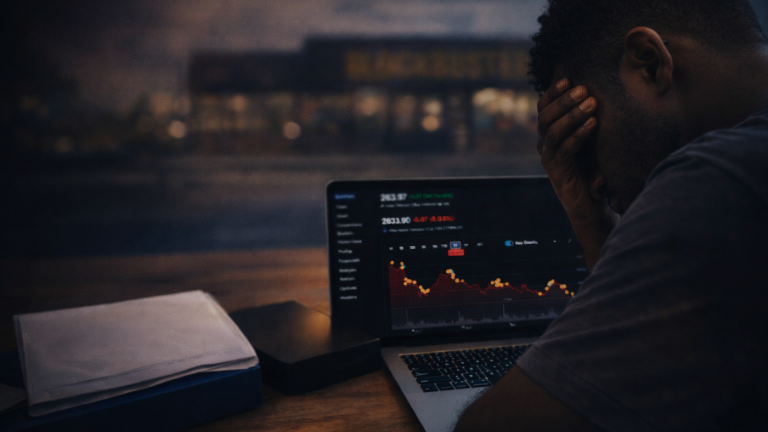
Ever rushed into a stock, business, or investment just because everyone called it “the next big thing”? Your heart’s racing. Your instincts are buzzing, all the signs scream “opportunity.” So, you dive in, maybe into a hyped company like the now-defunct CBEX, without really knowing what they do, how they make money, whether they can survive a real storm… or if it’s even legit.
And then poof… your money disappears like smoke. This type of mistake can only be caused by one thing: not asking the right questions.
Billionaire investors like Warren Buffett, Ray Dalio, Charlie Munger, Carl Icahn, Ken Griffin and others didn’t get rich on gut feelings or headlines. They use a disciplined checklist of questions to vet every opportunity. Think of these questions like a pilot’s pre-flight checklist. After all, every time you are about to invest, your money is about to take off, So shouldn’t you double-check before the flight, to ensure guaranteed return?
In this blog, I unveiled 11 of the most powerful questions billionaire investors use to dissect every deal. It’s a special excerpt from my soon-to-be-released book: The Billionaire Investor’s Playbook: 21 Questions Billionaires Ask Before Investing in Anything, and it’s exactly the checlist we use at Whiz Investors Navigator before we invest in any business or reccomend one to our Community – Whiz Investors Club.
Now let’s dive into this power expo…
One: What Is The Company’s Business Model And How Does It Make Money?
If you can’t explain it to a young child in two minutes or less, you shouldn’t own it
Peter Lynch
Billionaires insist on fully understanding a business model before considering it as an investment option. Warren Buffett advises focusing on “businesses you understand.” Before investing, make sure you can explain what the company actually does, who it’s customers are, and how it earns profits. If the business is too complex or relies on opaque trends, a billionaire will often pass. Billionaires are always aiming for practical products and services sold in straightforward ways, not just sleek marketing. As billionaire investor Peter Lynch would say: If you can’t explain it to a young child in two minutes or less, you shouldn’t own it.”
Two: What Is The Company’s Durable Competitive Edge (“Moat”)?
Legendary investors look for a “wide and long-lasting moat” around the business. Think of Moat like the brand power of Coca-Cola, which looks simple but is difficult to be conquered by competition, or the patent-protected tech like Nvidia, a strong network effect like Google etc. A moat can also be cost leadership or regulatory barriers. Ask: Will new competitors easily undercut this company’s market, and ask if that advantage is sustainable in the long run? If the castle really is protected by strong, permanent factors, the business is more attractive. Warren Buffett warns that most advantages erode over time, so you need strong, permanent factors “to keep the castle standing” in the future.
Three: Who’s running the company, and What Are There Level of Integrity?
I want a business with a moat around it. I want a very valuable castle in the middle. And I want the duke who’s in charge of that castle to be honest and hardworking and able.
Warren Buffet
Billionaires examine the people in charge. Buffett looks for an “honest lord in charge of the castle.” Are the CEOs and management experienced, ethical, and motivated to act in shareholders’ interest? How do they allocate capital do they reinvest wisely or waste cash? Will excess cash be reinvested in growth, used to buy back undervalued stock, or paid out as dividends? Or will it be squandered on ill-advised acquisitions or extravagant projects? . A prudent investor demands that management demonstrate shareholder-aligned capital allocation. If management is untrustworthy, overly complex, or has a history of poor decisions, it’s a major red flag.

Four: Is the company truly profitable and generating strong returns?
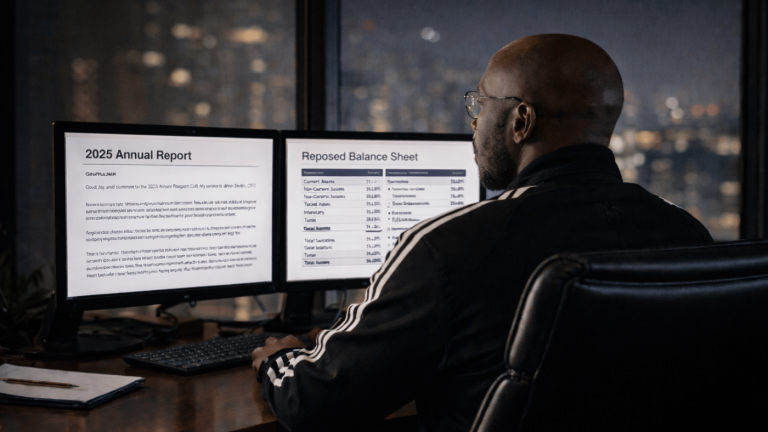
Billionaires would ask, is the business truly profitable and efficient? They dig into the numbers. Buffet always check Return on Equity (ROE) over many years. A consistently high ROE means the company earns strong profits on shareholders’ money, a sign of a durable business model. They also examine profit margins and free cash flow. If margins are shrinking or profits come from one-off gains, they’ll question sustainability. As one analyst notes, Buffett views a high ROE as evidence of an economic moat. In short, solid and growing profitability is a must.
Investors with higher risk tolerance should back early-stage businesses only if there’s (a) a credible, time-bound path to positive cash flow or (b) a hard, externally-validated value-inflection milestone and ≥18 months of post-raise runway at current burn (24–36 months for deep tech/biotech)
Five: What Is The Company’s Debt Situation?
Too much leverage can sink even a great business during a downturn. Billionaire investors examine debt-to-equity ratio; they look for companies that grow from equity, not leverage. Investors ask: Can this company service its debt if times get tough? They scrutinize the debt-to-equity ratio, interest coverage, and cash on hand. If the debt is sky-high, say, financing operations with mountains of loans, that business is much riskier. Buffett’s rule of thumb is to avoid companies where creditors outrank shareholders in what gets paid. In practice, low debt and strong cash flow are big positives; too much leverage is often a deal-breaker
Six: What Is The Intrinsic Value? (Margin of Safety?)
Billionaires estimate intrinsic value and demand a “margin of safety.” Benjamin Graham’s concept of margin of safety is sacrosanct: before buying. He taught that you should aim to buy a dollar of business for fifty cents. In other words, the market price should be substantially below their calculated fair value. Buffett calls margin of safety one of his investment cornerstones. So they’ll ask, is the stock trading well under what we think the business is worth? This discount cushions against errors. If you can’t justify a meaningful gap between price and value, you’re likely overpaying. Like Buffett would say, “Margin of safety, the principle of buying at a deep discount to intrinsic value, is one of the three most important words in investing.” If you can’t justify a sizable margin, or the only justification is relentless growth, you’re paying too much.
Seven: What Could Go Wrong?
What could go wrong, and how bad could it get? Billionaire investors invert the problem and hunt for vulnerabilities. They list worst-case scenarios: new regulations, disruptive technology, loss of a key patent or customer, economic recessions, or even fraud. They pore over SEC filings and auditor notes, looking for inconsistent accounting or related-party deals. For instance, unexplained revenue jumps or legal contingencies would trigger alarms. Charlie Munger’s advice applies: avoid being the “very smart person doing very dumb things,” so ask yourself, “What could make this business go bad?” And how bad can it get?” In practice, billionaire investors focus on risk first, not reward. If a business could easily collapse in a downturn (like Kodak did with digital cameras), that risk caps the investment’s appeal. They only invest when the upside clearly outweighs such downsides
Eight: How Does This Fit With My Other Investments?
Billionaires Investors think in terms of the whole portfolio. For instance, Ray Dalio’s famous “All-Weather” approach that balances different economic conditions suggests holding at least 15 uncorrelated assets to mitigate risk while preserving returns. Billionaires ask, will this investment move independently of my other bets or just double down on the same risks? If it’s highly correlated (e.g., another bank stock when I already own 2), they might limit the size. If it offers true diversification, they might allocate more. Of course, they don’t seek blind diversification either. Making a handful of good uncorrelated bets that are balanced and leveraged well is the surest way of having a lot of upside without being exposed to unacceptable downside.” So a billionaire will ask if this position moves in sync with their other holdings or if it truly diversifies risk. If it’s highly correlated with existing bets, maybe less of it should be bought.
Nine: Is This a Price Driven By Hype or Fundamentals?
Billionaires invest based on solid conviction and zero emotions; they are never driven by hype nor noise. Billionaires steer clear of fads and memes. Warren Buffett gave a guideline for this when he said, “In the short run, the market is a voting machine (driven by emotion), but in the long run it is a weighing machine (driven by fundamentals).” If everyone’s chasing a stock because it’s hot on Twitter, a disciplined investor doubles down on research. They ask, “Am I buying this company for its actual cash flows and growth prospects, or because I’m scared of missing out?” If analysts or the media are frothing over this stock, a savvy investor doubles down on due diligence; they neither get confused nor distracted by noise. They seek the real story in the financials, not the market buzz.
Ten: Can I Hold This For A Decade?
If you aren’t willing to own a stock for 10 years, don’t even think about owning it for 10 minute
Warren Buffett
Warren Buffett famously said, “If you aren’t willing to own a stock for 10 years, don’t even think about owning it for 10 minutes.” Billionaires invest with a horizon of years, even decades. They demand that the business story be durable enough to play out long-term. They also monitor their emotions: if the market tanks, they don’t panic-sell; they often buy more of great companies at lower prices. In fact, Buffett advised resisting panic: “Don’t sell, buy.” Before buying, a final sanity check is to imagine a better price: “Would I still buy this if it were 20% cheaper?” If not, the current price might be too high. They know that being patient and unemotional, even greedy when others are fearful, has built fortunes over time. If your plan is to flip this stock in 6 months, you’ve already missed the mark. Billionaires only invest in businesses they believe will outlive them.
Eleven: Is Management Aligned with Shareholders?
Billionaire investors pay close attention to this because it says a lot about how committed leadership truly is. When founders and executives hold a significant stake in the company, their financial future is tied to the business, so they’re far more likely to make smart, long-term decisions that benefit all shareholders. As Buffett and Munger put it, leaders should have “lives very well aligned with ours.”
It’s a major red flag if a founder sells a large portion of their shares too early or if a CEO’s compensation is based solely on short-term metrics like quarterly earnings or stock price. That often leads to risky decisions and short-term thinking. Real alignment means ownership, patience, and shared risk. If the people running the company don’t believe enough to bet on themselves, why should you?.
Bonus: What is the expected return versus the risk?
Billionaires treat investing as a risk-adjusted game. They often do rough math: “If I pay $X for this, how much can it realistically go up or down?” Munger puts it bluntly: “All intelligent investing is value investing: acquiring more than you are paying for. You must value the business in order to value the stock.” In practice, this means calculating your upside (based on conservative profit and growth estimates) and comparing it to the potential downside (business failure, market drop, etc.). If the numbers don’t offer a clear reward-to-risk edge, then tread with caution.
By methodically getting real answers to these questions, billionaire investors think of every stock as a slice of a real business. They pull the trigger only when the answers are strong: when they understand the business, see a durable moat, trust the management, and know they’re buying with a great margin of safety. This disciplined, question-driven approach is what legends like Buffett, Munger, and Dalio, among other billionaire investors, have used to build long-term success.
What you’ve just read is only a sneak peek: 11 of the 21 critical questions featured in my upcoming book, The Billionaire Investor’s Playbook: 21 Strategic Questions Billionaires Ask Before Investing in Anything. In the full guide, we go deeper into each question, exploring what it tests, why it matters, common investor psychology traps, and flag indicators (green, yellow, and red) that help you spot excellence, caution zones, or outright danger before you invest in anything. These questions are your secret weapon to outthink the herd.
Important Note: These 21 questions form the exact blueprint we use at Whiz Investors Navigator to evaluate every investment opportunity before recommending it to our community, the Whiz Investors Club. When we recommend something, you can be assured that it’s also in our own portfolio.
Want more? Join the Whiz Investors Club to get exclusive early access and member-only insights, so you’ll be first in line when The Billionaire Investor’s Playbook is released and get the same proven tools the top 1% use to build lasting wealth. Because real success isn’t about luck, it’s about knowledge. And knowledge begins with knowing what questions to ask before taking important actions like buying an investment.
Found this insightful? Share this with your friends, family, and loved ones. The more people around you make smart money moves, the more financially safe your circle becomes.
You may also like: The Most Important Land Titles and Documents You Need In Every Real Estate Transaction
Or 7 Deadly Mistakes To Avoid While Investing In Real Estate In Nigeria 2025
I am Anthony Cee, your Investment Compass. Stay sharp, Stay Strategic, Stay Focused and always WIN with Whiz.
See You In The next one…
Disclaimer: This content is for educational and informational purposes only and does not constitute financial advice. The opinions expressed here are independent and for the current period only. Investors should conduct their own due diligence and consult a licensed financial advisor before making any decisions. Past performance is not a guarantee of future results.