
Ever wondered why some people always seem to know the right time to buy investments… while others lose sleep and savings?
Well, get comfortable…
Because what you’re about to read is a deep dive into Nigeria’s economic history, from independence till today, and how it has quietly shaped fortunes, destroyed wealth, and offered clues only the sharpest investors have been able to decode.
Quick note: This blog isn’t about party politics or personal sentiments; it’s about the money, the patterns, and how they affect your wealth. We follow facts, not noise, and we help you build wealth, regardless of who is in power. Let’s break it down…
1960 Independence: Freedom… and the First Taste of Economic Hope
Nigeria gained independence in 1960 under Prime Minister Sir Abubakar Tafawa Balewa. Back then, our economy was built on agriculture: cocoa, palm oil, groundnuts, and rubber. Each region had its strength and exported it proudly.

The First National Development Plan (1962-1968) focused on building schools, roads, and farms. The government wanted to use agriculture to grow the economy.
Investment Landscape: At this point, the idea of stock trading or real estate investment wasn’t popular. People invested in farms, livestock, and trade.
Takeaway: Real wealth starts with real production, and every production needs a home (real estate). Nigeria’s initial wealth came from land, not oil. Keep that in mind.
1970s: The Oil Boom That Changed Everything
Leadership: After the civil war, General Yakubu Gowon, then Murtala Mohammed and Olusegun Obasanjo, oversaw a new Nigeria flourish with oil money.
In the 1970s, crude oil became king. Prices skyrocketed, and money rained. But instead of investing wisely, the government spent heavily on imports and federal jobs.
Key Policy: Nigerian Enterprises Promotion Decrees (1972 & 1977): This tried to transfer foreign-owned companies into Nigerian hands. The motive was economic independence.
The Boom: Lagos saw a real estate explosion. Everyone wanted a piece of Lagos. The Nigerian Stock Exchange became more attractive as new companies were listed. Cash flowed, but the plan was weak. We became too dependent on oil and stopped nurturing agriculture.
Takeaway: When you build your fortune on one income stream (without diversification), one global shock can wipe you out (like the Nigerian economy, which was primarily built on oil and other sources were neglected). Again, diversification is necessary.
1980s: The Party Ended. Enter the Economic Crisis
Leadership: President Shehu Shagari tried to manage a debt-ridden economy. Then came General Buhari in 1983, followed by Babangida in 1985. Oil prices crashed, the naira was overvalued, and Nigeria couldn’t pay its debts.
The Big Move: In 1986, Babangida, in collaboration with the then Finance Minister Olu Falae, introduced the Structural Adjustment Program (SAP) under pressure from the IMF.
What SAP Did:
- Floated the naira (devaluation)
- Removed subsidies
- Pushed privatization
Impact on You (If You Were Born Then): Your salary could barely buy anything. Businesses crashed. Real estate slowed. Stock market volatility increased.
Takeaway: Policies build or break wealth. Prudent investors track government moves, not just market trends, to make investment decisions.
1990s: Instability and Missed Opportunities
Leadership: Military rule under Generals Sani Abacha and Abdulsalami Abubakar.
What Happened:
- Political tension
- Investor fear
- International sanctions
The Plan: Vision 2010 tried to outline a plan for future growth, but the instability overshadowed everything.
Investment Impact: The stock market limped. Real estate was attractive only in relatively peaceful areas like Abuja.
Lesson: When leadership is uncertain, markets struggle. You must protect your assets during chaos.
2000s: Debt Relief and the Rise of Modern Nigeria
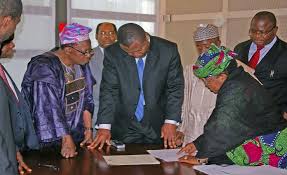
Leadership: President Olusegun Obasanjo returned as a civilian leader in 1999. Finance Minister: The famous Ngozi Okonjo-Iweala, Nigeria negotiated a major debt relief with the Paris Club in 2005.
Policy Reforms:
- Privatization of public companies
- Establishment of the Pension Commission (PenCom)
- GSM Revolution
Result: Boom in the financial sector. The Nigerian Stock Exchange entered its golden age. Between 2004 and 2007, investors made huge returns, and Abuja and Lagos exploded with new estates, malls, and developments.
Takeaway: Good Reforms = Confidence = Cash Inflow = Market Boom
2010s: Oil Crisis, Recession, and The Search for Stability
Leadership: Goodluck Jonathan (2010–2015), then Muhammadu Buhari (2015–2023).
Shocks:
- Global oil prices crashed in 2014
- Naira tumbled
- Nigeria slipped into recession in 2016
Policy Moves:
- Buhari’s government implemented the Treasury Single Account (TSA)
- Anchor Borrowers Program to boost agriculture
Stock Market: 2016–2017 was turbulent. Foreign investors pulled out, and the capital market dipped.
Real Estate: High-end markets slowed down. Affordable housing gained traction.
Lesson: Don’t chase hype. Look at the underlying value. During recessions, smart investors buy distressed properties cheap.
🌌 2020s: Covid, Reforms & Currency Tsunamis
Leadership: Buhari’s second term, then Bola Ahmed Tinubu took office in 2023.
Key Players:
- Yemi Cardoso, current Central Bank Governor (appointed 2023)
- Wale Edun, Minister of Finance
Policies That Rocked the Boat:
- Fuel subsidy removal (Tinubu 2023)
- FX market unification (CBN 2023)
- Hiked interest rates to tame inflation
The Shocker: In 2024, Nigeria’s inflation hit an all-time high of 34.8%. Meanwhile, the stock market gave a 35.3% return. Sounds great, but when you subtract inflation, real returns were nearly wiped out, about 0.5%
Real Estate Response: Prudent investors ran to land and buildings to protect their wealth from the naira’s free fall.
Takeaway: When inflation hits, assets with fixed income (like savings) suffer. Real assets become king.
Key Takeaways for Investors
- Policies shape profits. Always track what the federal government, CBN governor, and finance ministers are doing.
- Inflation is a thief: if your investment isn’t beating inflation, you’re losing money.
- Recessions are buying seasons: The smart money enters when fear is high.
- Real estate outlasts currency crises: Land won’t devalue like the naira, but you must buy right.
Now, if you’ve read this far, one thing should be clear: this wasn’t a political analysis.
It’s a map of money, mistakes, and moments that shape financial decisions.
This blog is not about taking sides. We’re here to help you make sense of the chaos and build wealth regardless of who holds the mic in Abuja, because when others get emotional, we get strategic.
That’s the Whiz Investors Navigator edge.
Why Whiz Investors Navigator Is Your Compass

At Whiz Investors Navigator, we don’t just follow the market; we read the signals. Our team studies trends, dissects policies, and shows our clients the smartest investment plays before the crowd catches on. We follow the money, not the hype. And if you want to win with clarity in the middle of confusion, this is your compass.
Whether you’re a first-time investor or managing a billion-naira portfolio, our goal is simple: to help you WIN consistently by avoiding traps, riding trends, and multiplying your wealth.
If you found this post insightful, share it with your friends, family, and loved ones. The more people around you make smart money moves, the more financially safe your circle becomes
I am Anthony Cee, Your Investment Compass. Stay sharp, stay strategic, stay focused, and always… WIN with Whiz!
See you in the next one…